The Pop-Tarts Bowl has emerged as the most watched non-College Football Playoff (CFP) bowl game of the 2025 college football season. This year”s game, featuring No. 12 BYU against No. 22 Georgia Tech, recorded an impressive average of 8.7 million viewers, according to ESPN PR. BYU clinched a narrow 25-21 victory, marking a significant moment for the bowl.
This viewership figure positions the Pop-Tarts Bowl as the most popular non-CFP bowl since the 2019-20 Citrus Bowl and clearly outstrips other non-playoff college football games this season. The game attracted nearly one million more viewers than the second most-watched non-CFP bowl, the Pinstripe Bowl, which garnered 7.6 million viewers. The Gator Bowl also performed well, pulling in 6.0 million viewers. However, these numbers are particularly striking when compared to the viewership of the NBA.
Typically, games during the NBA Conference Finals attract around 5 to 5.5 million viewers. In fact, several matchups in the 2025 NBA Playoffs saw viewership dip to between 5.1 and 5.2 million, marking some of the lowest numbers for conference finals in the past four years. This means that the Pop-Tarts Bowl outperformed significant NBA playoff games by over three million viewers.
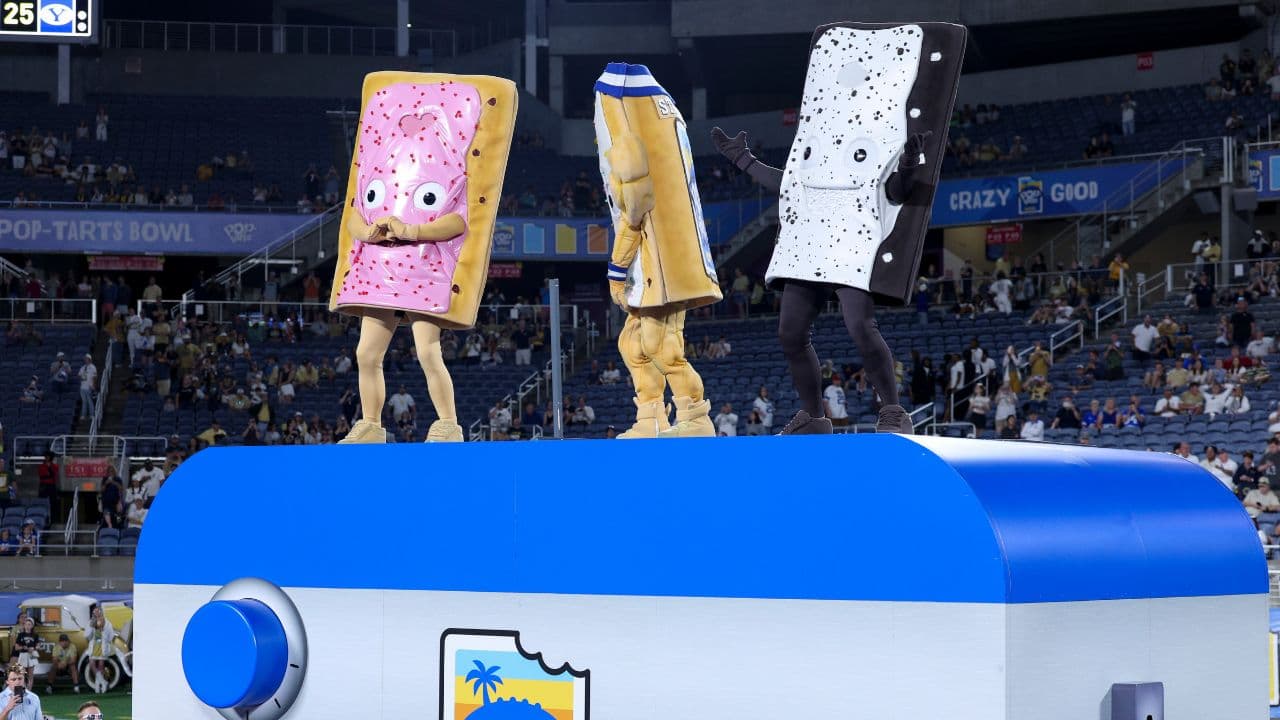
So, what contributed to this remarkable viewership? The answer appears to be a combination of effective marketing and unique entertainment value. From its inception, the Pop-Tarts Bowl has embraced a spectacle-oriented approach. With a memorable edible Pop-Tart mascot and a giant toaster celebration on the field, the event has become more than just a football game; it has turned into a viral sensation that attracts casual viewers eager to see what unusual moments will unfold.
Furthermore, the absence of Notre Dame from the playoff conversation after their snub may have inadvertently fueled interest in the bowl. The discussions surrounding Notre Dame”s exclusion drew in neutral fans curious about how the rest of the bowl games would unfold. Controversies in sports often pique viewer interest.
The NBA”s Conference Finals faced their own set of challenges, with smaller-market teams like Oklahoma City and Minnesota taking center stage, and a series of blowouts that diminished the excitement of the games. Viewers tend to tune out when outcomes seem predetermined, which likely impacted the NBA”s ratings.
Timing also played a crucial role. The Pop-Tarts Bowl aired on December 27, right after Christmas, a period when families gather around the television. This timing clearly worked in favor of the bowl game, contrasting with the NBA”s struggle to draw in viewers despite its star-studded lineups.
In conclusion, the ability of a Pop-Tarts-themed bowl game to outshine the NBA Conference Finals underscores the evolving landscape of sports entertainment, where viewer engagement can often hinge more on entertainment value than competitive stakes.