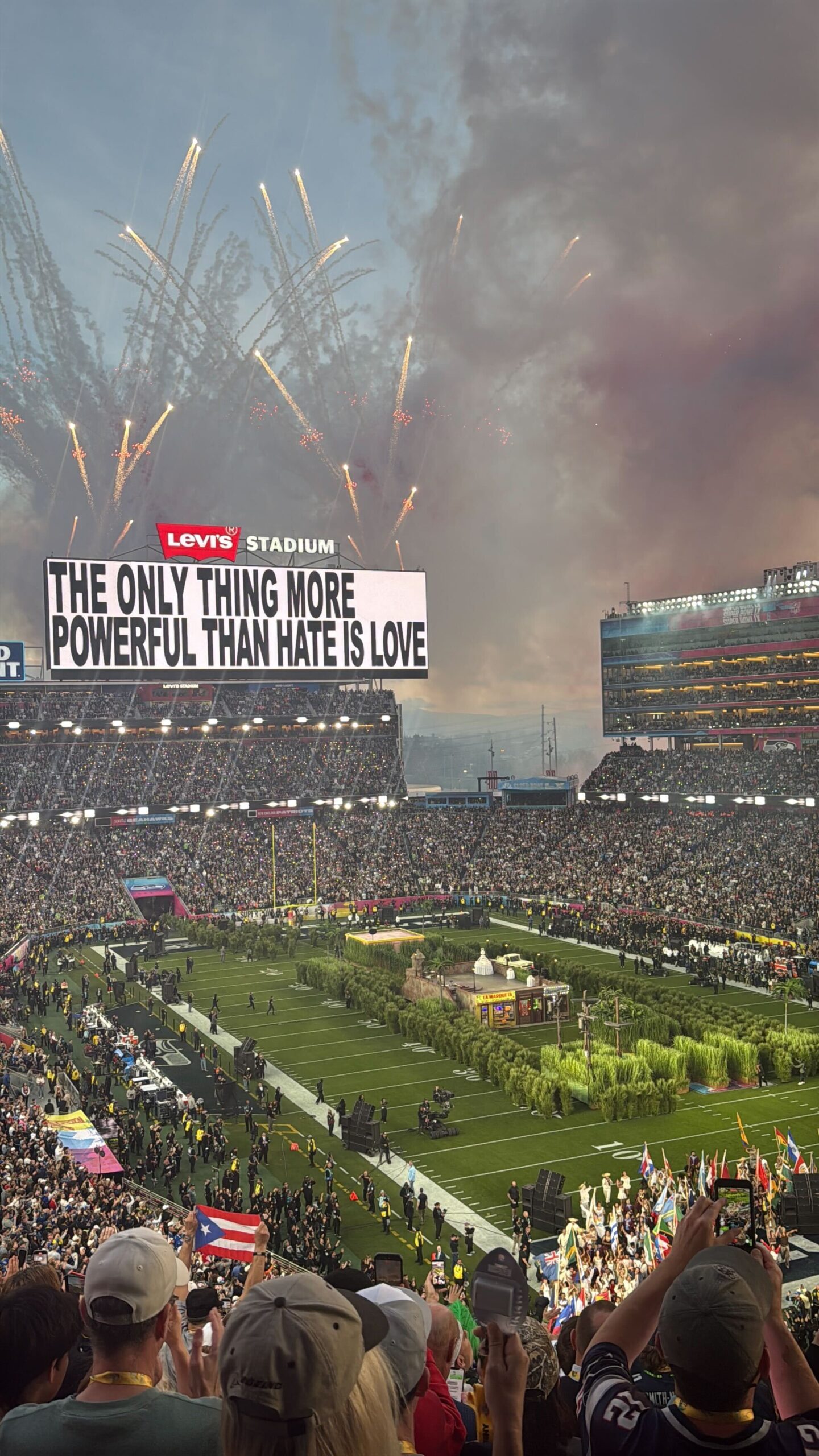
Bad Bunny delivered a Super Bowl halftime performance that was a vibrant celebration of cultural identity, joy, and togetherness. When he was announced as the performer for Super Bowl LX, there were immediate reactions, with some skepticism regarding a primarily Spanish-language show appealing to the mainstream audience. However, my anticipation remained high, trusting that Bad Bunny would authentically present himself and let his music shine.
The show opened with “Titi Me Pregunto,” one of Bad Bunny”s most popular tracks, which immediately set an energetic tone. The playful confidence of the song signaled that this was not just an ordinary performance; it was a bold statement. Following this, “Yo Perreo Sola” had the audience fully engaged, transforming the atmosphere from passive observation to active participation.
In a statement prior to the event, Bad Bunny expressed his vision for the show as lighthearted and fun, emphasizing that he wanted people to focus solely on dancing. This concept was evident throughout the performance, particularly in tracks like “Safaera” and “Party,” which created a sense of community and collective celebration, rather than mere entertainment.
Bad Bunny skillfully paced his set, allowing each moment to resonate. The much-anticipated “BAILE INoLVIDABLE” was placed perfectly in the lineup, followed seamlessly by “NUEVAYoL,” demonstrating the importance of transitions. A notable highlight came when Lady Gaga, a guest performer alongside Ricky Martin, delivered a salsa-inspired version of “Die with a Smile,” showcasing her vocal prowess and dance skills while blending harmoniously with Bad Bunny. Their collaboration felt genuine, especially after their earlier interaction at the Grammys.
When the two performed “LO QUE LE PASÓ A HAWAii,” the moment carried historical significance, linking Bad Bunny”s performance to a broader narrative of Latin music”s global influence. Visually, the show was equally thoughtful, with the set design featuring La Casita, a nod to Bad Bunny”s Puerto Rican roots and his album “Debí Tirar Más Fotos.” The vibrant structure evoked a sense of intimacy, filled with relatable details like a bodega, a wedding scene, and even a child asleep amidst the festivities.
This image of the sleeping child struck a chord, representing a familiar scene from family gatherings where the joy of music and dance continues around them. It served as a poignant reminder that culture thrives in everyday moments just as much as in grand spectacles.
The finale was emotionally charged, with “CAFé CON RON” transitioning into “DtMF,” as flags from numerous countries filled the field. Spotting the Haitian flag, a personal connection formed within me. Messages such as “Together we are America,” displayed prominently, felt genuine and impactful, offering a counter-narrative to those seeking controversy. Instead, the performance radiated pride, joy, and inclusivity.
Ultimately, what made Bad Bunny”s halftime show resonate was not just any single song or visual, but the thoughtful integration of cultural elements. The bodega, the wedding, the sleeping child, and the flags all combined to create a rich tapestry beyond mere entertainment. Bad Bunny did not conform to mainstream expectations; instead, he presented his world with authenticity. As a fan watching, the experience felt like a moment of recognition rather than mere observation. After the initial skepticism surrounding his performance, this recognition transformed it into a successful and meaningful celebration, perfectly timed with his recent Grammy win for Album of the Year.