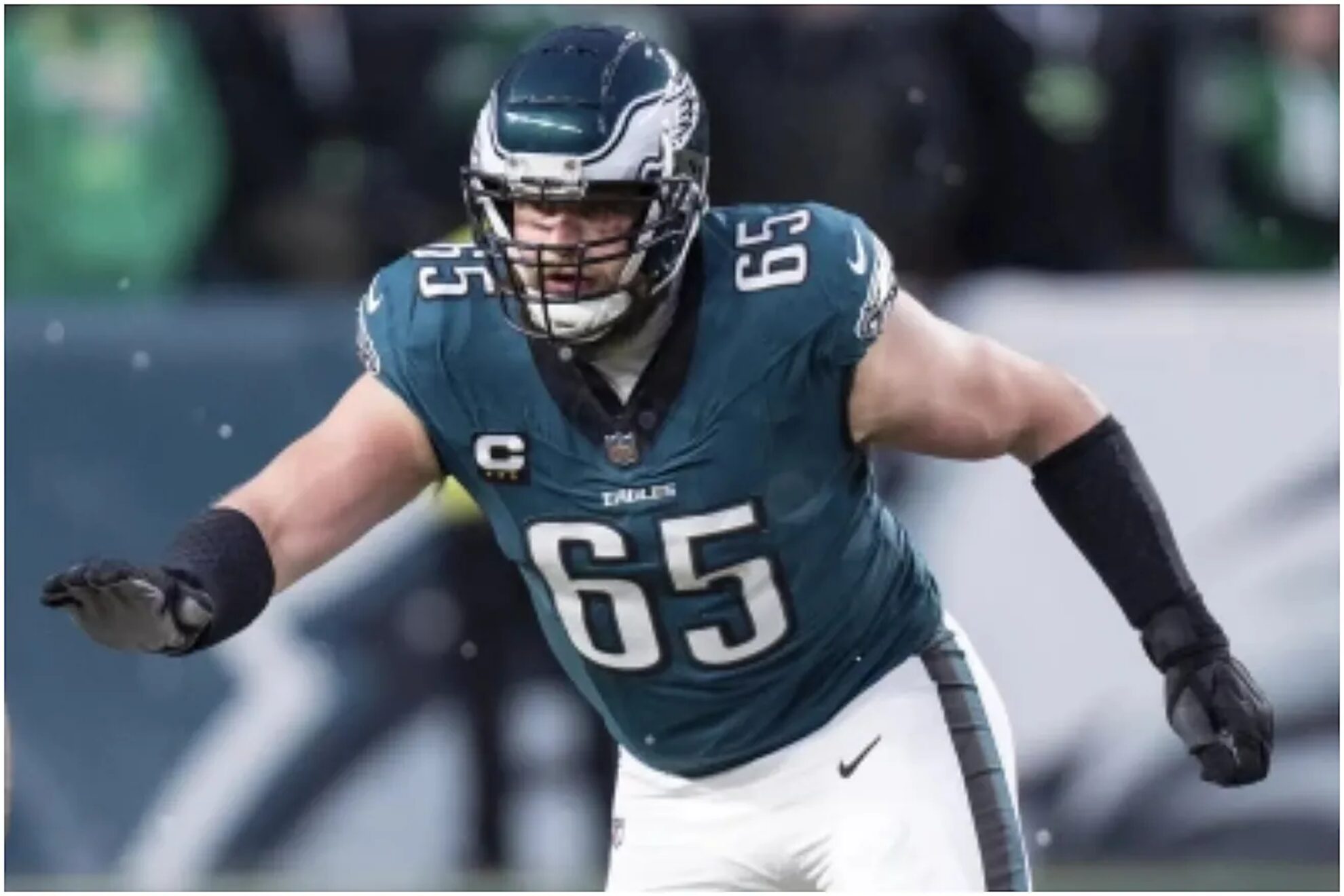
Lane Johnson, a prominent player for the Philadelphia Eagles, recently showcased his thoughts on the NFL”s changing perspective regarding the “tush push.” This week, he took to social media, sharing a laughing emoji in reaction to a report from Adam Schefter, indicating his amusement at the league”s latest decision.
The “tush push,” a strategy where the quarterback is propelled forward by teammates during a sneak, was nearly banned at the forthcoming NFL owners” meeting in Phoenix. This play has sparked considerable debate, being both praised for its effectiveness and criticized for pushing the limits of traditional football play. By deciding not to ban this tactic, the NFL allows teams to continue utilizing a strategy that was crucial during the Eagles” championship season.
During the 2024 season, the “tush push” gained significant attention as the Eagles effectively used it to secure vital short-yardage gains. However, some teams, notably the Green Bay Packers, have voiced their discontent, arguing that the maneuver undermines competitive integrity. In a bid to eliminate the “pushing element,” the Packers introduced a proposal at the 2025 annual meeting, which narrowly failed to pass.
The ongoing scrutiny surrounding the play has intensified, particularly as defenses have adapted their approaches to counter it. NFL Competition Committee Co-Chairman Rich McKay mentioned that traditional quarterback sneaks without assistance are now showing a greater success rate than the push-assisted version. “I don”t know that it”s the end of the debate,” McKay stated, indicating ongoing concerns about the pushing aspect.
Instead of outright banning the play, the NFL is focusing on improving officiating to ensure referees effectively manage the scrums that occur during these plays. This shift aims to strike a balance between fairness and the tactical flexibility that teams require in critical game situations.
For Lane Johnson and the Eagles, this decision represents a symbolic victory, affirming their innovative strategy that contributed to a standout offensive performance. This situation highlights a broader trend in professional football, where innovation often challenges established rules, though it may become accepted once its competitive advantage lessens.