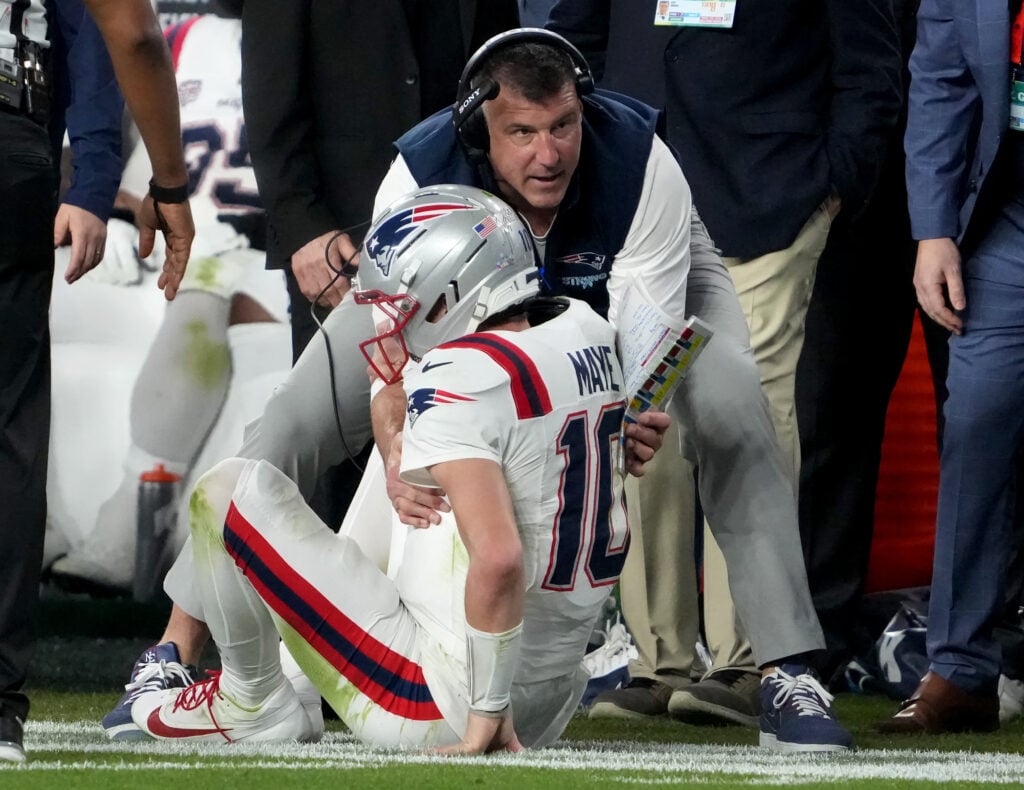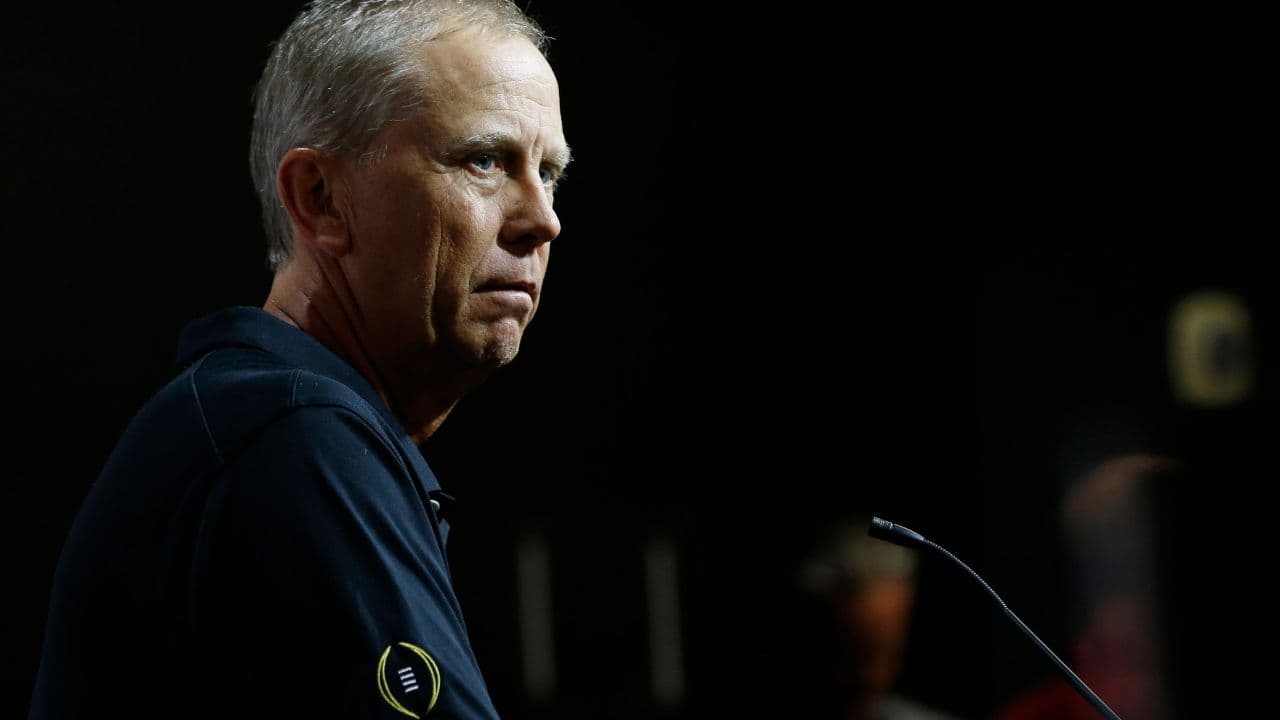
When Cleveland Browns head coach Todd Monken stated that Shedeur Sanders” role is still “to be determined,” he likely intended to provide a straightforward and honest answer. However, this comment has stirred a significant discussion regarding leadership, quarterback development, and the merits of transparency in a franchise seeking stability.
During Super Bowl week, Sanders addressed Monken”s remarks, responding with maturity and emphasizing the need to “prove it every day” to secure his position. “That”s what”s expected,” Sanders noted. “Each and every day, I have to prove it. The small goals add up to long-term success.” His composed response garnered admiration throughout the league, highlighting his understanding of the situation.
On the show Speak Easy, the conversation quickly evolved into a philosophical divide. Former NFL running back LeSean McCoy defended Monken”s candor, suggesting that the new coach simply requires more time in Cleveland to make a decisive call. In contrast, analyst Emmanuel Acho strongly argued that Monken should have committed publicly to Sanders, regardless of any private uncertainties. In Acho”s view, this was a situation where effective leadership necessitated certainty rather than caution.
McCoy”s rationale centered on the context of Monken”s brief tenure in Cleveland, during which he has had limited opportunities to analyze film, assess practice habits, and foster relationships with his quarterbacks. Declaring Sanders as the starter prematurely would have been unwise. McCoy also pointed out that Sanders, being a fifth-round pick, does not carry the same organizational investment as a first-round selection. “It”s not a guaranteed role,” he explained. “Let the coach get in there and watch the film.”
From McCoy”s perspective, Monken”s response conveyed an important message: nothing is guaranteed, and everything must be earned. For Sanders, whose journey has taken him from Jackson State to Colorado and now to the NFL, this mindset resonates deeply. More crucially, Sanders himself appeared comfortable with the situation, emphasizing accountability over complaint. To McCoy, this demonstrated both maturity and competitiveness, qualities vital for sustained success.
Acho, however, viewed the situation differently. While he acknowledged Sanders” composure, he scrutinized Monken”s public messaging, especially given Cleveland”s recent struggles with quarterback stability. Last season, Sanders” role fluctuated significantly, transitioning from backup to third-string, with limited preseason opportunities and a lack of consistent footing. Acho contended that this ambiguity hindered both the player”s development and the team”s overall cohesion.
Due to this context, Acho believes Monken should have expressed immediate public support for Sanders. “Whether he knows it or not, lie,” he suggested. “Say, Shedeur”s the guy.” He cited Minnesota”s management of J.J. McCarthy as an example, asserting that early confidence can solidify a locker room, enhance trust, and provide a young quarterback with the psychological security necessary for growth. Without such a commitment, Acho fears Cleveland may be doomed to repeat past errors.
Both perspectives hold merit. Acho is correct that quarterbacks often flourish in stable environments, and history reflects that inconsistent roles can stifle development. The Browns, more than many franchises, understand this reality. Conversely, McCoy”s stance aligns with the practical aspects of roster management. Sanders does not possess automatic franchise status, and prematurely anointing him could undermine Monken”s credibility if performance fails to meet expectations.
In many respects, Monken is navigating a delicate balance between motivation and stability. So far, Sanders seems prepared to rise to the challenge. Monken”s approach also aligns with his broader coaching philosophy. Rather than imposing rigid systems on players, he crafts strategies around their individual strengths. Monken employs simple yet highly effective concepts tailored to his personnel. This suggests that the quarterback competition is less a matter of doubt and more about exploration.
If Monken”s previous success is any indication, Cleveland”s offensive strategy is on the brink of significant transformation. His philosophy prioritizes adaptable explosiveness, attacking defensive vulnerabilities rather than adhering to strict game plans. Transitioning from Air Raid tactics in college to a more flexible system in Baltimore, Monken has consistently emphasized results over tradition. Fans of the Browns should anticipate weekly adjustments and a more aggressive, matchup-driven game plan.
This adaptability extends to quarterback development. Observers have noted that Monken “can maximize whatever these QBs can do,” a principle that will guide Cleveland”s offensive framework. Instead of employing a single system for different quarterbacks, Monken customizes pocket movement, passing lanes, route timing, and other elements to fit the unique capabilities of each player.