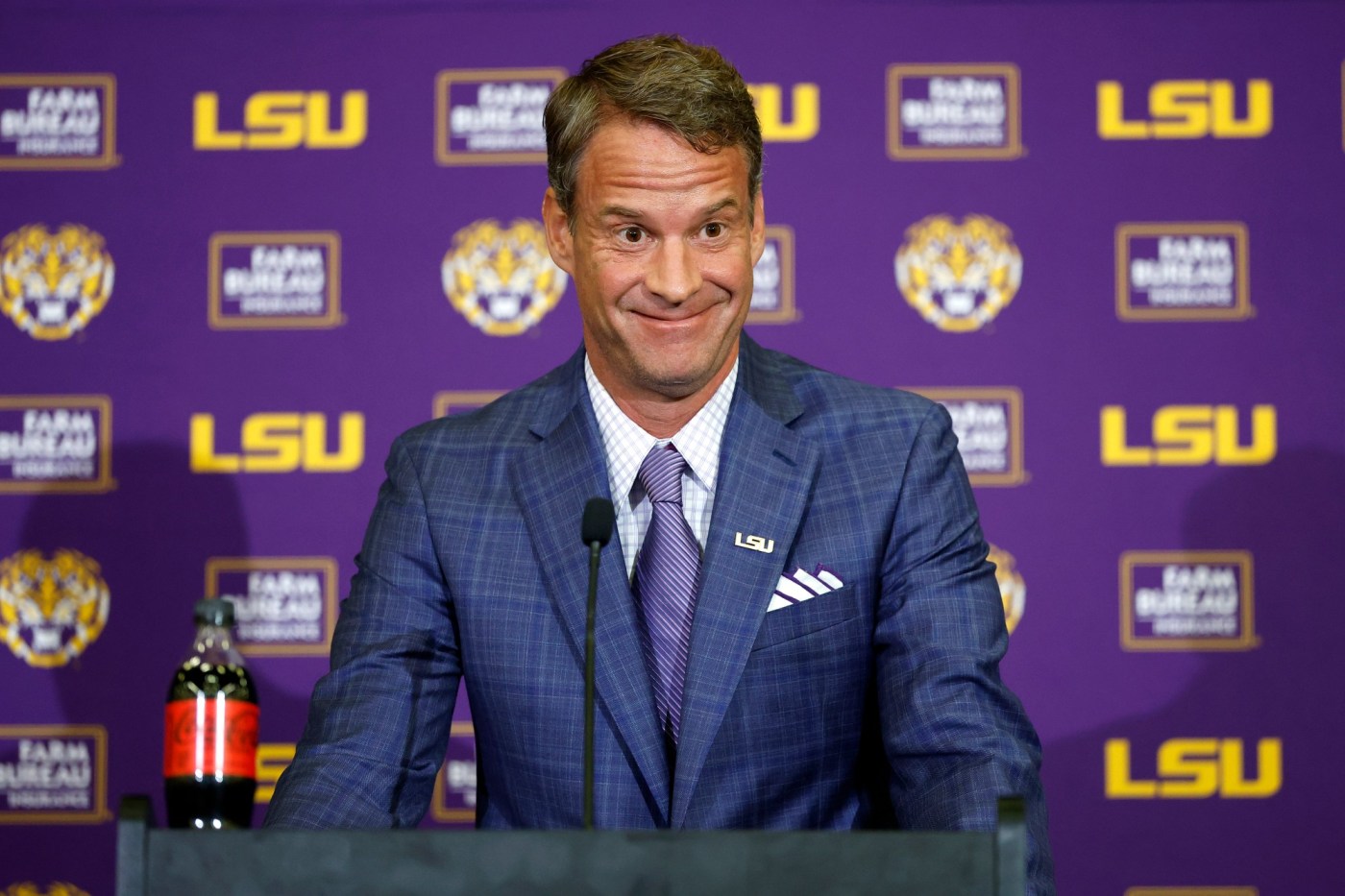
As Lane Kiffin embarks on his latest coaching journey, transferring from Ole Miss to LSU, the reaction from fans has been anything but warm. As he boarded a private plane in Oxford, Mississippi, a crowd of University of Mississippi supporters sent him off with boos and gestures reflecting their disapproval. This exit mirrors Kiffin”s tumultuous history with various teams, showcasing a pattern of rapid departures.
The narrative surrounding Kiffin”s previous firing from USC in 2013 has evolved over time. Contrary to the popular belief that he was dismissed on the tarmac after a disappointing loss, Kiffin clarified that a meeting took place in a conference room at the airport after their flight back to Los Angeles. “I wasn”t left on the tarmac,” he told ESPN earlier this season, providing further context to the situation.
While the details of his firing at USC may not be as sensational as once thought, Kiffin”s recent decision to leave Ole Miss—which is poised for a potential College Football Playoff appearance—has generated significant controversy. His abrupt shift to a conference rival in LSU has led to questions about his commitment and loyalty, especially after attempting to recruit Ole Miss staff for his new role.
Historically, Kiffin has faced criticism for his quick transitions between coaching positions. After his tenure with the Tennessee Volunteers, he moved to USC, then to Alabama, and most recently Florida Atlantic. The irony lies in the fact that Nick Saban, who has had a pivotal role in Kiffin”s career, appeared to support Kiffin”s latest move while also advocating that he should be allowed to finish the season with Ole Miss.
The timeline of college football is fraught with complexities that often clash with the recruiting calendar and the postseason. Kiffin”s predicament illustrates the chaos inherent in the sport, with coaching vacancies at multiple programs arising before the season concluded. Kiffin”s agent, Jimmy Sexton, is a significant player in these developments, representing several high-profile coaches.
Critics argue that the current state of college football reveals a fundamental hypocrisy. Coaches frequently receive praise for pursuing better opportunities, while players have faced scrutiny for seeking fair compensation for their talents. Kiffin”s new contract with LSU is reportedly more lucrative than that of the previous coach, Brian Kelly, further amplifying these discussions.
As college football navigates its murky waters, Kiffin”s latest move serves as a stark reminder of the business”s cutthroat nature. His frequent relocations draw attention to larger issues within the sport, raising questions about the balance of power between coaches and players.
Ultimately, Kiffin”s situation emphasizes the need for reflection on how college football operates. As the sport grapples with its identity, the implications of Kiffin”s decision will resonate beyond the field, impacting perceptions of commitment, loyalty, and ethics in the game.