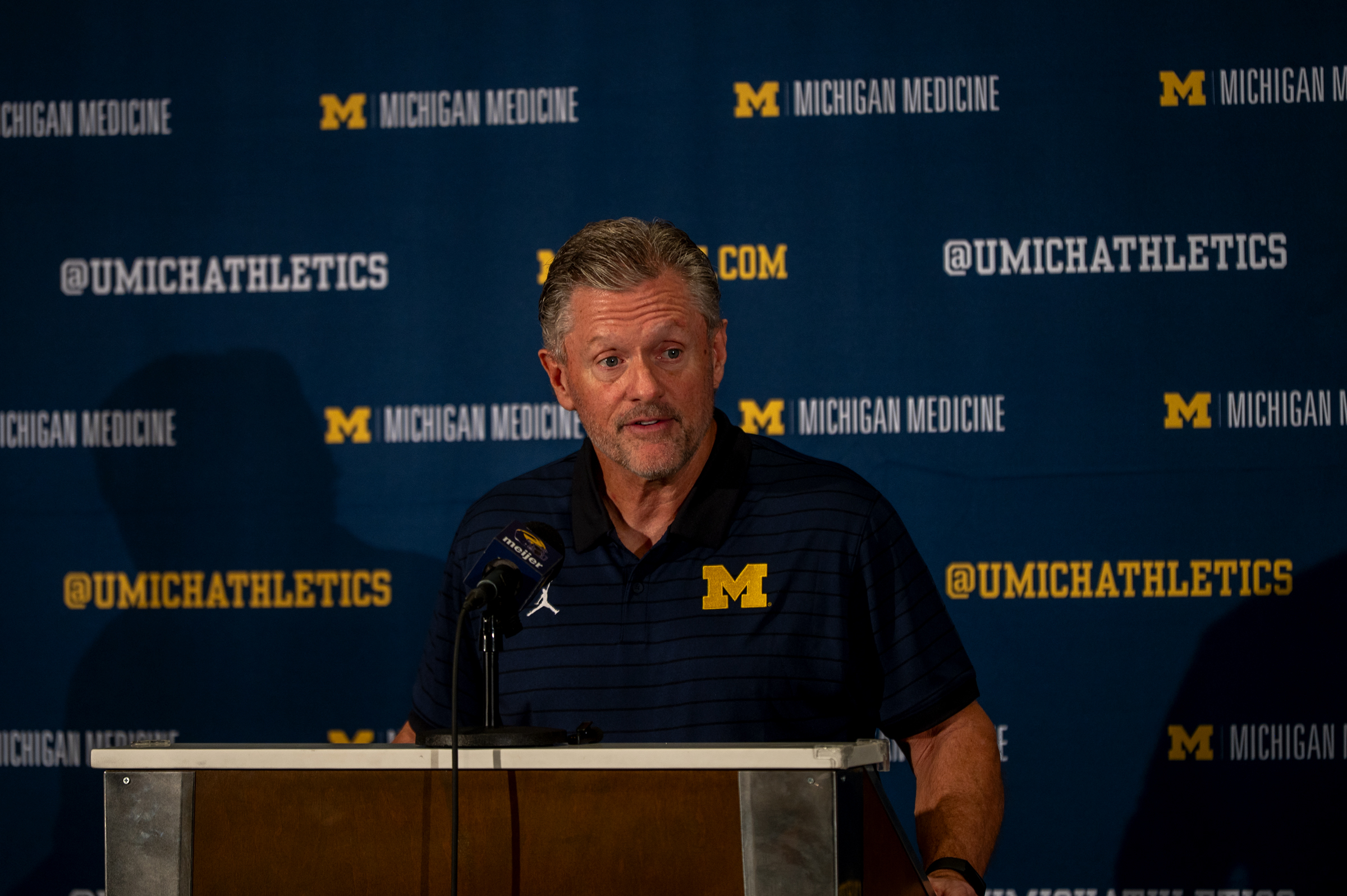
Following a challenging offseason, the Michigan football team has integrated numerous new players into its 2026 spring roster. While the circumstances surrounding these changes were unusual, adapting to personnel shifts has become commonplace in college football. Fortunately for the Wolverines, head coach Kyle Whittingham has devised a strategy to leverage the strengths of his new squad.
“Three or four years ago, we made a concerted effort at Utah to simplify,” Whittingham stated. “With the portal and the roster turnover, you can”t implement a scheme on either side of the ball that requires a year or two to master.” By streamlining the offensive approach, Whittingham aims to enhance productivity from a revamped roster as swiftly as possible.
Although the team may be unfamiliar with each other, they collectively bring a wealth of on-field experience, providing Whittingham and offensive coordinator Jason Beck with a variety of options. With a newly structured offensive line, they anticipate that freshman quarterback Bryce Underwood will thrive alongside a competitive group of receivers. The final composition of the receiving corps is yet to be determined, but Whittingham has high hopes for sophomores Andrew Marsh, Jaime Ffrench, and JJ Buchanan, as well as freshman Salesi Moa, who are expected to play crucial roles in the offense.
This combination of a true freshman, two transfer players, and one returning Wolverine is projected to not only meet but surpass expectations, largely owing to Beck”s user-friendly offensive system. “One of the main reasons we brought Beck in was that his scheme is very user-friendly and the learning curve is not steep,” Whittingham remarked. “It”s very effective, but the learning curve isn”t steep.”
In 2025, Beck utilized a “positionless” offensive strategy at Utah, emphasizing versatility across various positions. This innovative use of offensive talent allowed Utah to disrupt opposing defenses and achieve impressive rankings in several offensive metrics. Last season, the Utes placed fourth in total offense, third in third-down conversion rate, and second in rushing offense. In contrast, Michigan ranked 66th in first-down offense, facing difficulties in maintaining offensive momentum. If Beck can effectively harness the available talent within his scheme, it could be the solution that the Wolverines” offense desperately needs.
“It”s an essential part of modern college football to have a system that is essentially plug and play,” Whittingham stated. “Some of our new players won”t arrive until summer, and we expect them to contribute this fall, so we need to bring them up to speed quickly.”
As the spring season unfolds, numerous uncertainties remain regarding the team”s personnel for the upcoming fall. However, Michigan is poised to rely on its strategy of a simplified offensive scheme, anticipating that its new group of Wolverines will effectively execute it.