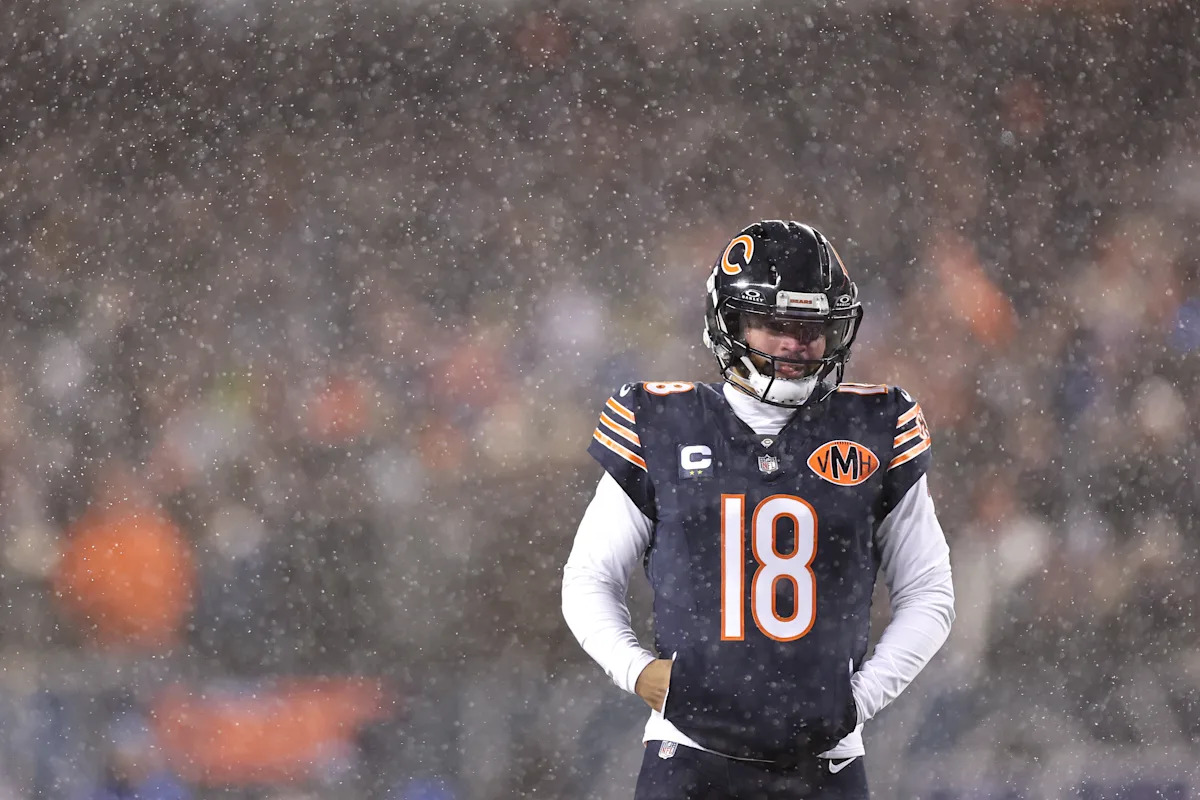
In a thrilling playoff matchup, the Chicago Bears faced off against the Los Angeles Rams on Sunday night, ultimately falling 20-17 in overtime. This nail-biter saw the Bears once again come down to the final possession, a familiar script for the season.
With just 27 seconds remaining, Caleb Williams executed a remarkable 14-yard touchdown pass to Cole Kmet on a crucial 4th and 4, tying the game and pushing it into overtime. The Bears” defense stepped up, forcing a Rams punt on their first possession in overtime, giving Chicago a chance to secure victory.
However, fate dealt a harsh blow. The Bears managed to advance to the Rams” 48-yard line after a 10-play, 36-yard drive. On a pivotal 2nd and 8, Williams had a clean pocket but threw deep, aiming to secure a field goal opportunity. Unfortunately, Rams safety Kam Curl intercepted the pass, setting the stage for the Rams to kick a 42-yard field goal and clinch the win.
This interception has sparked considerable debate. In my view, I agree with former Bears quarterback Chase Daniel, who stated, “You can”t blame Caleb Williams for the INT in OT… the Bears have the absolute perfect play called.” Daniel highlighted a lack of effort from the intended receiver, DJ Moore, which contributed to the turnover.
Analyzing the decision to throw deep, I see no issues with it; the Bears have thrived on explosive plays throughout the season. If the pass had been completed, they would have been in a favorable position for a field goal. In evaluating the throw, I believe that had Moore run his route with full effort, the pass would likely have been incomplete rather than intercepted. Thus, I attributed the interception to a turnover-worthy throw from Williams, but I also feel that Moore shares some responsibility.
Despite the heartache, Williams” performance was notable. I recorded six big plays against the Rams, bringing his total to 13 for the playoffs. His big play rate surged to 12.9%, nearly doubling his regular season average of 7.6%. While his negative play rate increased slightly, it did not significantly detract from his overall effectiveness.
Williams” passing statistics reveal a mixed bag. His passer rating of 59.3 during the game might suggest a lack of effectiveness, yet his offense outgained the Rams, achieved more first downs, and converted nearly half of their third downs, all without allowing a sack. Comparatively, Rams quarterback Matthew Stafford”s rating was 67.4, indicating a better performance on paper, but advanced metrics like ESPN”s QBR and PFF grades show a different story, with Williams outperforming Stafford in key areas.
The game also displayed areas for improvement. Williams had a time to throw of 2.96 seconds, indicating a growing comfort within the offense. However, five interceptions in two playoff games raise concerns, especially since many were influenced by receiver errors or miscommunication.
In summary, while the final score stings, Williams showed significant promise in his playoff debut. The Bears consistently moved the ball against a formidable Rams defense and created explosive plays. His accuracy and decision-making appear to be on an upward trajectory, suggesting a bright future. As the Bears look ahead to the 2026 season, there is reason for optimism regarding both their franchise quarterback and the team”s overall direction.
As we conclude our weekly grades for the 2025 season, I look forward to diving deeper into the data and insights from this year, with plenty of offseason content to come. Stay tuned for more updates as we analyze where the Bears go from here.
Gary Baugher Jr. contributes to TouchdownJournal.com with insights drawn from over 16 years in organized football and a lifelong passion for the sport.