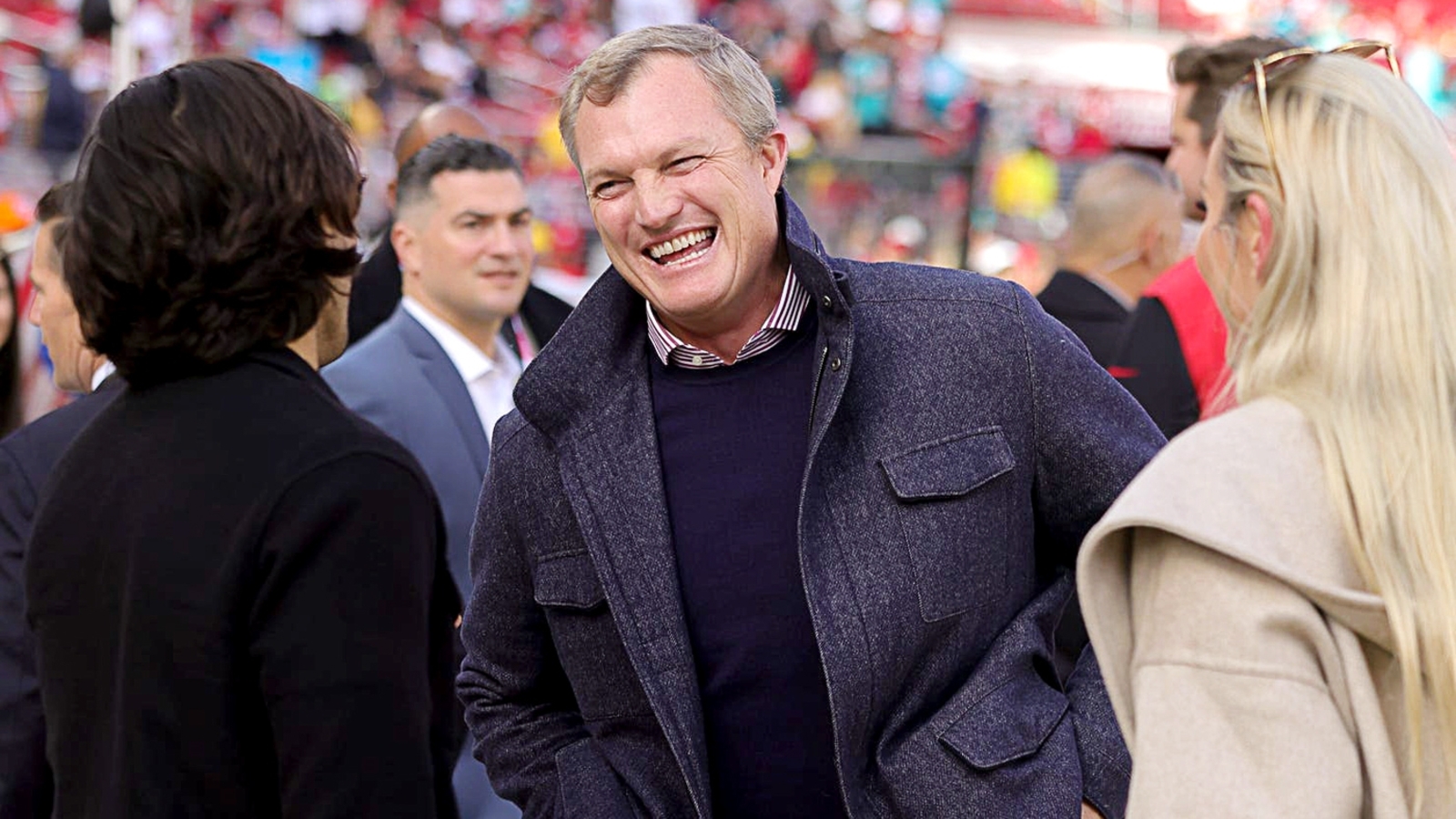
Recently, San Francisco 49ers beat writer Grant Cohn examined the draft record of general manager John Lynch, noting his shortcomings in selecting players. While Cohn miscalculated the number of players Lynch has drafted—stating 41 instead of the accurate 30—it is clear that Lynch has had significant misses in the early rounds.
To accurately assess Lynch”s performance, a deeper analysis is required. It is not entirely fair to include players from a rookie class in the evaluation of “misses.” For instance, last year”s draft saw third-round pick Upton Stout start at nickel cornerback effectively, while second-round defensive tackle Alfred Collins showed promise and is expected to improve next season. Additionally, first-round selection Mykel Williams was progressing well before suffering a season-ending knee injury, making it difficult to judge his impact at this stage.
Among the notable successes in Lynch”s tenure are stars such as Nick Bosa, Fred Warner, Deebo Samuel, and Brandon Aiyuk. Wide receiver Ricky Pearsall has also made a strong impression when healthy, and current guard Dominick Puni appears to be a solid asset. However, the case of Mike McGlinchey, a former ninth overall pick, and second-rounder Aaron Banks, raises questions, as both were allowed to leave in free agency despite their potential value.
Moreover, Lynch”s record includes infamous high-profile busts like Solomon Thomas and Trey Lance, the latter costing the 49ers several valuable draft picks. Injuries have also plagued the team, with first-rounder Javon Kinlaw and second-rounder Drake Jackson struggling to stay on the field, raising concerns about their selections given their injury histories in college. Third-round pick Jalen Hurd faced similar issues, failing to make it past his first training camp.
To better understand Lynch”s draft strategy, it is essential to consider his overall performance, particularly in the later rounds. Surprisingly, while many poor evaluators struggle throughout the draft, Lynch has excelled in the later stages. Day three selections have yielded players such as George Kittle (All-Pro), Talanoa Hufanga (All-Pro), and Dre Greenlaw (who narrowly missed a Pro Bowl nod). Other notable late-round picks include Deommodore Lenoir and Jauan Jennings, who was selected in the seventh round, and DJ Jones from the sixth round. Furthermore, star quarterback Brock Purdy was the last player chosen in the 2022 NFL Draft.
Of the 47 players Lynch has drafted on day three, 11 have achieved Pro Bowl status or become significant starters, with Greenlaw, Hufanga, and Jones contributing to the Denver Broncos” formidable defense this season. This suggests that about one in four late-round picks can develop into high-level contributors.
Lynch has also made successful undrafted free agent signings, including linebacker Azeez Al-Shaair, running backs Jordan Mason and Matt Breida, and wide receiver Kendrick Bourne. Al-Shaair has emerged as a key player on the Houston Texans” top-ranked defense, and it was anticipated that Texans head coach Demeco Ryans would pursue him due to their shared history in San Francisco.
Interestingly, of the ten highest-paid players on the 49ers, five were selected on day three, with another, Fred Warner, being a third-round pick. This raises questions about Lynch”s ability to draft effectively in the early rounds, as only Aiyuk and Bosa were taken in the first two rounds and have since become impactful players.
Further analysis reveals a curious trend: Lynch has struggled with early-round running back selections. Third-round picks Trey Sermon and Ty Davis-Price quickly fell out of favor, while sixth-rounder Elijah Mitchell and undrafted talents Mason and Breida excelled. This inconsistency raises concerns about Lynch”s ability to evaluate the talent pool effectively.
As the team looks ahead to the upcoming 2026 season, fans will be eager to see how Lynch approaches the draft. With four picks on day three this year, it remains to be seen whether Lynch can replicate past successes in the later rounds.